Sand Loop
- 4.3
- Rating
- 1.00M
- Installs
- Free
- Price

 Analysis by App-foxy
Sand Loop is the kind of puzzle game I open when I want something quiet, simple, and visually satisfying rather than a demanding challenge. Made by VOODOO, it turns the basic act of collecting colored sand into a gradual reveal of artwork. That sounds modest, and it is, but the appeal comes from the rhythm: make a few careful moves, watch the image take shape, then decide whether to keep refining your approach or simply enjoy the result.
I found it easiest to understand as a relaxing, short-session puzzle game. It is free to start, aimed at a Teen audience, and available for devices running Android 8.0 or later. The current version is 1.1.6, and its presence on more than a million devices suggests that the straightforward idea has found an audience. Its average rating sits at 4.0 from roughly eleven thousand ratings, which feels consistent with my impression: enjoyable for the right mood, but not a perfect fit for everyone.
How the basic sand-and-artwork loop feels
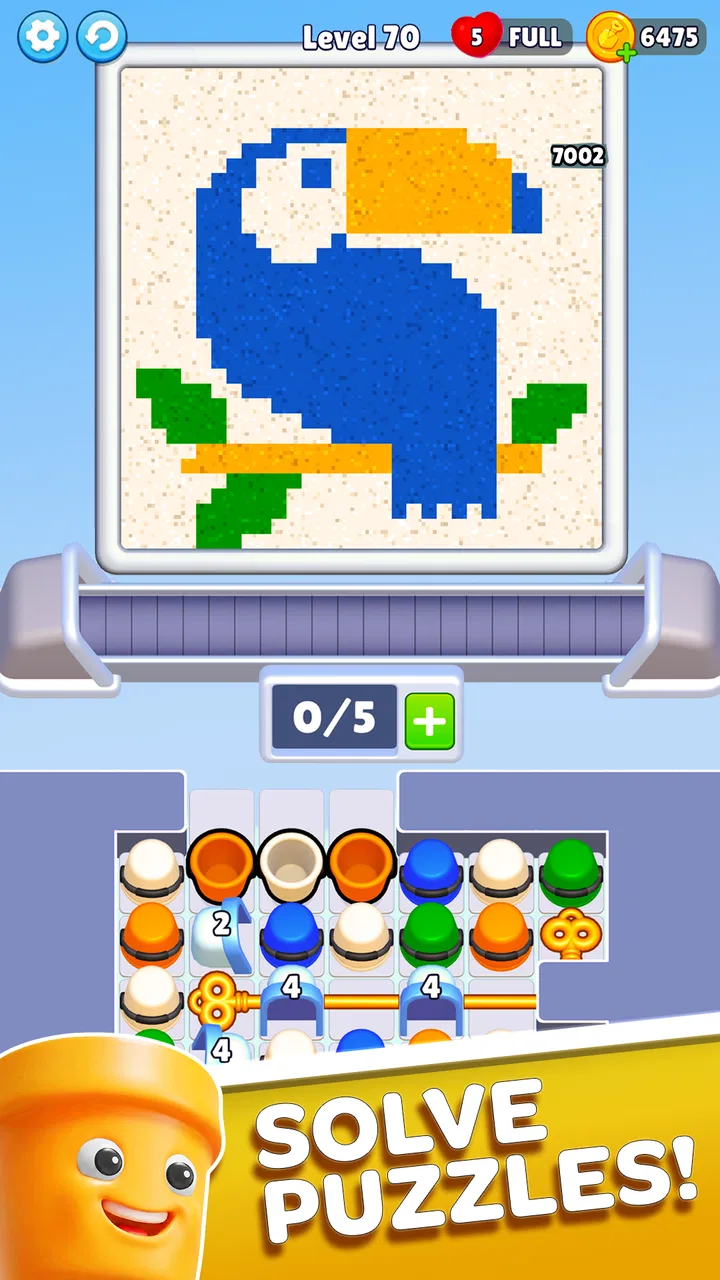
The central workflow is deliberately uncomplicated. I collect colorful sand, guide the available material through the puzzle, and gradually uncover an image. There is no need to learn a large collection of rules before starting. The visual result gives each small action a purpose, so even a brief session feels like progress rather than a series of disconnected moves.
You May Also Like

 Blood Strike: 2.5 Anniversary
Blood Strike’s Loadouts Turn Every Drop Into a Tactical Gamble
A close look at Blood Strike’s custom loadouts: how fast access to signature weapons reshapes its battle royale rhythm, rewards preparation, and narrows the gap between fights.

 Pandora - Music & Podcasts
Pandora’s Music Is Easy to Start, but Harder to Recover
Pandora’s strength is its low-effort path from a seed to a station. Its weak spot is how much confidence it asks you to place in connection, setup, and quiet recovery.

 8 Ball Pool
 Is Built on Rivalries, Rematches, and Routine
A close look at the rivalries, rematches, shared routines, and unanswered safety questions that turn a quick pool match into a persistent mobile community.

 Samsung Music
’s Quiet Strength Is Playing What You Already Own
Its reach comes less from spectacle than from dependable access to a personal library. That simplicity is both the app’s strongest retention engine and its ceiling.

 AccuWeather: Weather Radar
AccuWeather Review: A Quick, Clear Forecast for Everyday Decisions
For everyday plans, the best forecast is the one you can understand quickly. AccuWeather makes rain timing, radar, and local conditions easy to act on, with a few trade-offs.

 Hill Climb Racing
Why Hill Climb Racing Still Turns Crashes Into One More Run
A tiny car, a bumpy hill and one more upgrade: Hill Climb Racing keeps resurfacing because its simple chaos makes every near-miss feel personal.
More From Our News Desk
View All News


That simplicity is the main strength. I can play while taking a short break, waiting for an appointment, or winding down before bed without committing to a long level or a complicated story. The game does not ask me to remember a large inventory of tools or manage several competing objectives. I focus on the current arrangement, make a move, and see how the artwork changes.
The best way to approach a new puzzle is to resist rushing toward the most obvious open space. I first look at the overall shape and identify where one color appears to have the clearest route. This small pause matters because an early move can affect the way later sand settles. Even in a calming game, a little planning makes the result feel more deliberate.
I also recommend treating the artwork as a guide instead of staring only at the sand. When a section begins to appear, its colors and edges can help me understand what the puzzle is trying to form. That creates a useful feedback loop: the more of the picture I reveal, the easier it becomes to judge the next sensible action.
For an everyday example, I might play a few rounds during a lunch break. I can begin without preparing anything, make progress in small steps, and stop when I need to return to work. The game suits that situation better than a competitive puzzle that punishes interruption. It is also more approachable than a traditional logic game if I want visual feedback instead of a score-focused test.
Why the first few sessions are appealing
The reveal mechanic gives the game a gentle sense of anticipation. I am not only solving an arrangement; I am waiting to see what the completed composition will look like. That makes each successful sequence feel more rewarding than a bare “level complete” message.
There is also a useful difference between playing for completion and playing for relaxation. If I concentrate on finishing as efficiently as possible, I notice the puzzle decisions more sharply. If I slow down and watch the colors spread, the same game becomes almost meditative. Sand Loop works because it supports both attitudes without requiring a separate mode.
Still, players who need deep strategy may find the loop too light. The game’s attraction is the combination of simple interaction and visual progress, not a large competitive system. Someone looking for elaborate deduction, elaborate character development, or a campaign with substantial narrative should choose a different puzzle experience.
Settings and practical checks before settling in
Because the core interaction is so minimal, the settings deserve a quick look before I decide how I want to play. I check the sound controls first. Relaxing visual games can lose their appeal if the audio does not suit the moment, especially when I am playing in a quiet room or listening to something else. Adjusting the sound to match the situation makes the short sessions more comfortable.
I also pay attention to any available vibration or feedback controls. Tactile feedback can make placement feel more precise, but it is not always welcome when I am playing discreetly. Turning it down or off is a sensible habit for public transport, a waiting room, or late-night use. The important point is not to assume the default setup will suit every context.
Display brightness is another practical consideration. Bright colors and gradual artwork reveals are central to the experience, but a high-brightness screen can be tiring during longer sessions. I prefer a comfortable level that preserves the contrast between sand colors without making the game feel harsh. This is especially useful because the game encourages me to look closely at the developing image.
I would also review purchase controls before handing the device to a younger player. The game is free, but optional in-app purchases range from $1.99 to $99.99 per item. That does not make the game unsuitable, yet it does make device-level purchase protection worthwhile. For a shared phone or tablet, setting approval requirements in advance is a better habit than relying on memory after a session.
The Teen content rating is another reason to consider the intended player rather than assuming that every casual puzzle is aimed at children. The visual concept is gentle, but the rating should still guide family decisions. I would introduce it to a younger player only after checking the device’s own family controls and deciding whether the purchase setup is appropriate.
Habits that make each puzzle more manageable
My most reliable habit is to scan before acting. I look for narrow channels, large open areas, and colors that appear likely to interfere with one another. This takes only a moment, but it reduces the number of corrective moves I need later. The game becomes less about reacting to the latest change and more about preserving a useful route.
A second habit is to work in small sections. Rather than trying to understand the entire artwork immediately, I choose one visible region and follow how its color develops. Once that area is stable, I move to the next. This keeps the visual information manageable and prevents the screen from becoming a confusing collection of bright shapes.
I avoid making several rapid taps simply because the next move looks obvious. A fast sequence can be satisfying when it works, but pausing between actions lets me check whether the previous placement produced the result I expected. In a game built around gradual reveals, that pause is often more valuable than speed.
When I make a mistake, I try not to restart mentally before understanding what went wrong. I look at the current arrangement and ask whether the puzzle can still be completed from there. This is a useful trade-off: restarting may feel cleaner, but continuing can teach me more about how the sand behaves. The game is at its best when I treat errors as information rather than failure.
Faster patterns for experienced players
After becoming familiar with the basic rhythm, I began using a more repeatable approach. I identify the most constrained-looking area first, then protect the open spaces that may be needed for other colors. This is similar to solving a physical sorting puzzle: handle the part with the fewest options before spending freedom on easy sections.
I also use the artwork’s emerging edges as checkpoints. If a border or recognizable color block begins to look wrong, I stop and reassess instead of continuing to build on it. This is faster in the long run because it catches a poor sequence before the whole composition becomes harder to read.
Another useful pattern is to alternate between close inspection and a wider view. I zoom my attention in when choosing the next placement, then mentally step back to see whether the overall image is developing evenly. Focusing only on one tiny area can hide a problem elsewhere, while looking only at the full image can make the next action unclear.
I would not describe these as secret shortcuts, and the game should not be approached as though it has a hidden professional technique. They are simply habits that reduce hesitation. The more consistent my scanning, sectioning, and checking became, the less often I made moves just to see what would happen.
Players who enjoy optimizing can also separate two goals: completing the artwork and completing it with fewer uncertain moves. The first goal is relaxing and accessible. The second adds a personal challenge without needing a leaderboard or a complicated scoring system. That flexibility helps extend the game’s usefulness for me, although it may not be enough for people who need formal progression.
Where the relaxing design reaches its limits
The same simplicity that makes Sand Loop approachable can eventually make it feel repetitive. Once I understand the basic visual language, the act of collecting and revealing can become predictable. The game gives me a pleasant routine, but it does not replace a deep puzzle suite with many distinct mechanics.
Its dependence on visual attention may also be a drawback for some players. The artwork is not just decoration; it is part of the feedback that tells me whether I am progressing well. If I am tired, distracted, or playing on a small screen, the colorful details can be harder to interpret. In that situation, a text-heavy logic game or a puzzle with clearer symbolic instructions may be more comfortable.
There is a trade-off between the free entry point and the purchase structure. I appreciate being able to try the central loop without paying upfront, but the range of optional item prices means I would keep an eye on spending, especially on a shared device. Players who strongly prefer a single purchase with no additional buying decisions may feel more comfortable with a paid alternative.
The Teen rating can also affect who should use it. A person searching specifically for a child-focused sand or coloring experience should not assume that the casual presentation tells the whole story. I would check the rating and purchase controls before installing it for family use, rather than judging suitability from the artwork alone.
There is no reason to choose this game if what I really want is social competition, a long narrative, or a demanding daily brain workout. Its value is narrower and clearer: it offers a visually driven puzzle routine that can be played in short bursts. That focus is appealing, but it is not universal.
How it compares with familiar puzzle alternatives
Compared with match-three games, Sand Loop feels less frantic and less dependent on chasing chains or managing a score. I get a calmer sense of progress, with the artwork serving as the reward. A match-three title is a better choice when I want quick reactions, frequent effects, or a more obvious performance loop.
Compared with coloring apps, this game gives me more structure. I am not simply choosing colors freely; I am working through a puzzle that controls how the image appears. That makes the reveal more satisfying for me, but someone who wants full artistic control may prefer a coloring app instead.
Compared with traditional logic puzzles, it offers less explicit deduction. I am not filling a grid with numbers or proving a chain of clues. The challenge comes from reading space, color, and sequence. Players who enjoy Sudoku-style certainty may find the visual approach less precise, while players who dislike dense symbols may appreciate the softer presentation.
Compared with idle or incremental games, the progress feels more directly connected to my actions. I am not mainly waiting for resources to accumulate. I have to participate in the arrangement and observe the result. That makes it more engaging than a passive background game, though it also means it cannot provide the same hands-off convenience.
Who will get the most from it
I would recommend Sand Loop to anyone who wants a calm puzzle for short breaks and enjoys seeing a picture emerge from simple decisions. It is especially suitable for players who like visual feedback, gentle repetition, and a sense of completion without a large learning curve.
It is also a good option for someone who normally avoids difficult puzzle games but still wants a little structure. The basic workflow is easy to understand, while the scanning and sequencing habits give experienced players room to improve their approach. That combination lets me decide how seriously to take each session.
I would be more cautious about recommending it to players who become frustrated by repetition, need a strong story, or want a clearly measured competitive challenge. The game’s relaxing identity is not a weakness by itself, but it means the experience may feel limited if I expect constant novelty.
Storage and compatibility are straightforward starting points: the game supports Android 8.0 and newer. On an older device that does not meet that requirement, I would look for another puzzle rather than trying to force the installation. On a supported phone, the more important question is whether the visual style and purchase model fit the way I plan to play.
My verdict after building a steadier routine
Sand Loop works best when I let it be the small, focused game it is. I do not need to turn every puzzle into a speed test. A quick scan, a careful first move, and regular checks of the emerging artwork are enough to make the experience feel smoother and more rewarding.
VOODOO has chosen a narrow concept and made its appeal easy to understand: colorful sand, simple puzzle decisions, and a gradual visual payoff. The free starting point lowers the barrier to trying it, while the optional purchases mean I would configure spending controls before sharing the device. Those are practical details, not reasons to dismiss the game, but they should be part of the decision.
My final view is positive but measured. This is a relaxing visual puzzle, not a deep strategy game disguised as one. I would keep it installed for quiet breaks, especially when I want something more interactive than a coloring app but less demanding than a conventional logic challenge. If that specific balance sounds appealing, Sand Loop is worth trying; if you need constant novelty, formal competition, or complete creative freedom, another category of puzzle will serve you better.
For me, its strongest quality is the way a few attentive choices become a visible result. The game rewards patience more than speed, and experienced play comes from repeatable habits rather than complicated tricks. That makes it easy to recommend to the right friend: someone who wants a gentle puzzle ritual, understands the limits of a simple loop, and enjoys watching an image appear one careful step at a time.
FAQs for Sand Loop
01What is the main objective of Sand Loop?
Sand Loop is a meditative simulation game that allows players to create intricate sand patterns. The main objective is to explore creativity and relaxation by drawing shapes, watching them evolve, and experimenting with different tools and colors. There’s no competitive element, making it ideal for unwinding.
02Is Sand Loop available for both Android and iOS devices?
Yes, Sand Loop is available for download on both Android and iOS platforms. The app is designed to run smoothly on most modern devices, ensuring users across both ecosystems can enjoy its calming features and engaging interface without any compromise in performance.
03Does Sand Loop require an internet connection to function?
Sand Loop can be enjoyed offline, making it perfect for users who wish to relax without worrying about connectivity. However, an internet connection is needed for initial download, updates, and accessing any potential online community features or additional content.
04Are there in-app purchases in Sand Loop?
Sand Loop offers a variety of in-app purchases. These typically include additional tools, color palettes, and pattern packs that enhance the creative experience. While the core features are free, purchasing these extras can provide more variety and customization for dedicated players.
05How user-friendly is the interface of Sand Loop for new players?
The interface of Sand Loop is designed to be highly intuitive, catering to both new and experienced users. A brief tutorial guides first-time players through the basic tools and functions, ensuring they can quickly start creating and enjoying the relaxing experience without any steep learning curve.
Pros
- Intuitive user interface for easy navigation.
- Diverse range of sand patterns to explore.
- Relaxing sound effects enhance the experience.
- Customizable settings for personalized use.
- Offline mode available for uninterrupted play.
Cons
- Limited color options for sand patterns.
- Occasional lags on older devices.
- Ads can be intrusive during gameplay.
- Requires frequent updates for bug fixes.
- No multiplayer features for shared play.

Sand Loop
Gallery